
"coffee plant cultivation"
10000 article(s) found

The cultivated varieties of Coffee Tree: small seed and large seed
3. Cultivated varieties (1) small seed species (2) large grain species Coffea belongs to Rubiaceae, Coffea belongs to perennial evergreen shrubs or small trees, there are about 90 species. At present, there are small seed species (Arabian species), medium grain species (Gaffra species) and large grain species (Liberian species) cultivated in Hainan. (1) small seed species: also known as Arabian species, native to Ethiopia, evergreen shrubs. The plant is small, 4cm high and 5m high
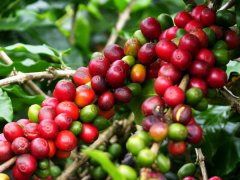
Which countries and regions can grow coffee? What conditions do you need to grow coffee?
Since coffee trees are tropical plants, they need to be planted in warm places. The main planting area is distributed between latitude 25 south and latitude 25 north with the equator as the center, so this area is also called the coffee belt. However, even in the coffee belt, Arabica and Robeska do not grow in exactly the same area, but grow up in an environment that is more suitable for their own growth.
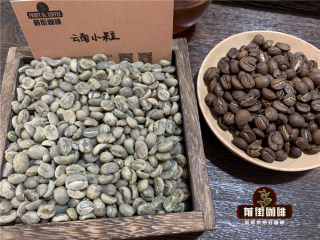
Yunnan coffee cultivation natural conditions Yunnan coffee production area Pu 'er coffee varieties characteristics
Professional coffee knowledge exchange More coffee bean information Please pay attention to coffee workshop (Weixin Official Accounts cafe_style) Qianjie Yunnan coffee production area introduction Yunnan is located in the world coffee planting golden belt, good ecological environment, rich natural resources create Yunnan coffee characteristics. Coffea yunnanensis

Introduction to Coffee cultivation in Honduras Saint Vincent processing Plant, Honduran Coffee Manor
Exchange of professional baristas Please follow the Coffee Workshop (Wechat official account cafe_style) Coffee cultivation in Honduras: coffee began to be grown in Honduras in 1804, and now there are 280000 hectares of coffee plantations, all of which are small coffee farmers, most of whom account for 60% of Hongguo's coffee production. In 2011, Honduras

Yunnan Dehong small Coffee planting Base
Dehong small grain coffee is native to Africa and Ethiopia and is the main cultivated variety in the world. In 1951, coffee seed was first introduced to Dehong Luxi Cotton cropping Experimental Station for productive cultivation. The seedlings were planted in 6 mu and grew well. In 1956, the Dehong Prefecture Committee decided to vigorously develop coffee in the whole state, and held a training course on coffee planting techniques throughout the state, so that small-grain coffee was widely developed in the whole state. 1958 de

Yunnan Dehong small Coffee planting Base
Dehong small grain coffee is native to Africa and Ethiopia and is the main cultivated variety in the world. In 1951, coffee seed was first introduced to Dehong Luxi Cotton cropping Experimental Station for productive cultivation. The seedlings were planted in 6 mu and grew well. In 1956, the Dehong Prefecture Committee decided to vigorously develop coffee in the whole state, and held a training course on coffee planting techniques throughout the state, so that small-grain coffee was widely developed in the whole state. 1958 de
Introduction of coffee beans and some boutique coffee in the main producing areas of coffee beans in the world (2)
Introduction of coffee beans and some boutique coffee in the main coffee producing areas of the world: central America

Coffee cultivation techniques General knowledge of Coffee planting
1. Cultivate strong coffee seedlings. 1. the choice of nursery land is close to water source, convenient for transportation, loam or sandy loam with loose and fertile soil, deep soil layer and good drainage, paddy field with PH value of 66.5 or early nursery land, and close to coffee garden. Turn over the depth of the ground by 0.200. 30 meters, after hoing and removing stones, the ridge soil moisture is 1.01.2 meters wide. 2 meters, about 10 meters long, and apply rotten and finely crushed soil moisture

What conditions do you need to grow coffee? where is the coffee planting belt located and why is it suitable for coffee cultivation?
Professional coffee knowledge exchange more coffee bean information Please follow the coffee workshop (Wechat official account cafe_style) Front Street-Coffee growing Zone introduction if we want to understand what is a coffee belt, we first need to know the growth environment of coffee tree, which plays a decisive role in the life cycle of plants: water, air, soil and light. But for coffee tree,
Cultivation and cultivation of High-quality Coffee
(1) Seedling propagation Coffee seedling propagation can be divided into seed propagation and asexual reproduction. 1. Seed propagation (1) seed collection, seed washing and seed storage during the full ripening period of coffee (the full ripening period of medium-grain coffee in Hainan Island is from February to March, and that of small seed is from September to November). The fully ripe fruits are picked from strong and high-yielding mother trees to make seeds. Immediately after the fruit is harvested, peel and wash the seeds. The method is to place the fruit.

Yunnan small Coffee with long aftertaste treatment method of Grinding degree and Baking degree of Fine Coffee beans in Huaguoshan
Cardamo Catimor is an improved variety of Tiebika seed, with 25% Robusta gene Yunnan small-grain coffee with good quality. Take Lujiangba small-grain coffee as an example: the percentage contents of the main components are as follows: crude fat 17.1, reducing sugar 0.93,starch 3.07,nitrogen 2.27,crude protein 1.419, ash 3.70,19.33 crude fiber, 2.14,9.20 sucrose and 6.87 moisture. Cloud

Various coffee cultivation methods the flavor of Ethiopian coffee
The origin of the coffee tree is Ethiopia in Africa. In botany, coffee trees belong to the evergreen trees of the subgenus Rubiaceae, and coffee beans, commonly known as coffee beans, are the seeds of the fruit of coffee trees, just because they are shaped like beans, so they are called coffee beans. Climate is the decisive factor for coffee cultivation. Coffee trees are only suitable for growing in the tropics or subtropics, so latitude 25 is south and north.
History of Chinese Coffee
According to historical records, Taiwan's cultivation was successful for the first time in 1884. Coffee trees were planted in China, and coffee cultivation on the continent began in Yunnan. In 1902, a French missionary named Tian introduced seeds at the Yinggong place, which was successfully planted in Binchuan County, Yunnan Province. it is located in a place called Zhu Kula, which is located on the bank of the Yushan River, a tributary of the Jinsha River.

The geographical location is very favorable for coffee cultivation. The varieties of manors in Vietnamese coffee producing areas introduce fine coffee.
Vietnam's geographical location is very favorable for coffee cultivation. Southern Vietnam has a hot and humid tropical climate, which is suitable for growing ROBUSTA coffee, while the north is suitable for growing ARABICA coffee. Coffee production in Vietnam has the following characteristics: (1) because there is no effective way to deal with fallen leaves, medium-grain coffee was selected as the main variety in the early 1980s. (2) take planting technology as

A brief introduction to the cultivation of cream-scented Vietnamese boutique coffee beans, geographical location, climate and altitude
Coffee production in Vietnam has the following characteristics: (1) because there is no effective way to deal with fallen leaves, medium-grain coffee was selected as the main variety in the early 1980s. (2) based on the planting technology, the planting method of coffee was determined, that is, under the hot and humid climate in southern Vietnam, high density planting, large amount of irrigation, excessive fertilization and no shading trees were obtained.
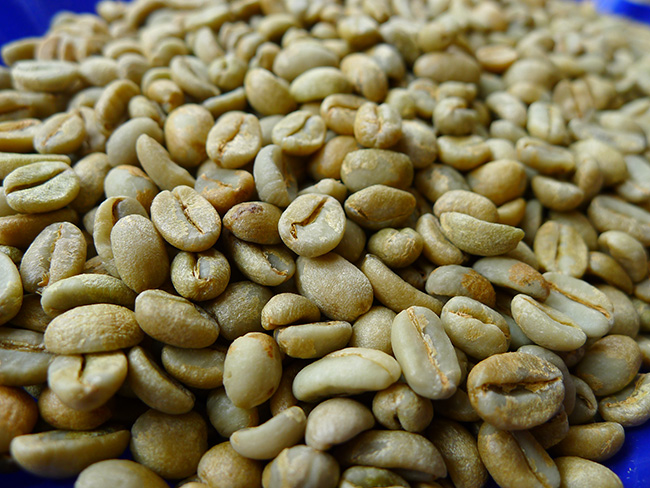
The cultivation of coffee beans the history of coffee beans the cultivation of raw coffee beans
Coffee raw beans are the seeds of coffee trees. It is the wealth hidden in coffee cherries (coffee berries) that people usually call coffee cherries. They are mistakenly called beans because they are similar to the beans we usually see, but they are actually the seeds of coffee. There are usually two flat oval coffee beans in the coffee berries, and a small number of coffee berries

Costa Rica has a long history of coffee cultivation, large national consumption, and cultivation of high-quality coffee
Coffee cultivation in Costa Rica was introduced from Cuba in 1779 and exported for the first time in 1820. There are about 32,000 coffee farmers, with an average planting area of less than one hectare (10,000㎡) per farmer. Costa Rica population 4.1 million (2006), area under coffee cultivation

A Brief Introduction to the Planting Market Price of Yunnan Fine Coffee Bean Varieties with Higher Yield
Yunnan coffee characteristics: Yunnan coffee due to unique geographical environment and climatic conditions, formed a strong but not bitter, fragrant but not strong, with a little fruity unique flavor, world-class coffee experts evaluation is the world's good coffee, its cultivation technology, yield is also world-class. Yunnan coffee is a variation of Arabic original species, after long-term cultivation and domestication, generally known as
Knowledge about coffee botany
According to the botanical description of coffee: coffee is Rubiaceae, coffee genus, perennial evergreen shrubs or small trees. There are more than 60 types of coffee classified, but there are roughly two varieties of coffee grown commercially on a large scale, one is Arabica, accounting for about 70 percent of the world's coffee planting area, and the other is Robasta, accounting for about 30 percent of the world's coffee planting area. According to our country

The latest news of the world coffee industry: the decline of coffee cultivation in Costa Rica
According to the Costa Rican "financier" newspaper reported on December 14. The planting area of coffee in Colombia has decreased by 6.4% in the past 30 years. It was 89881 hectares in 1984 and only 84133 hectares remained in 2015. Coffee gardens have to give up their land to real estate, especially in metropolitan areas. At the same time, the changes in coffee prices in the world have gradually reduced the profits of coffee cultivation, which are all placed on the main side of the coffee garden.